
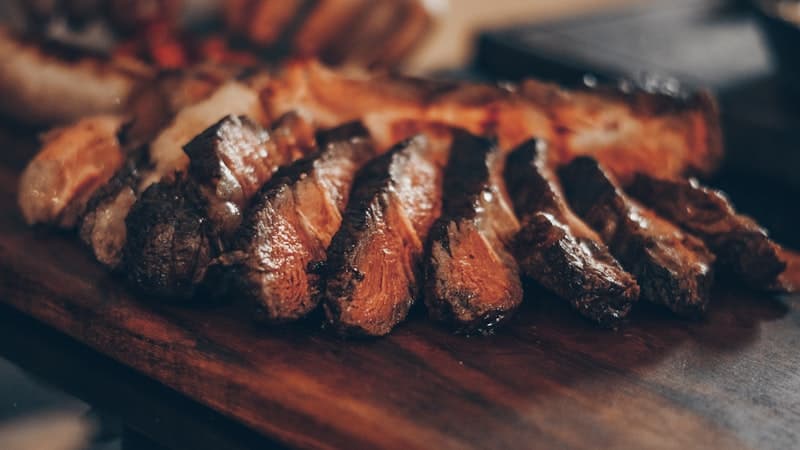
Why Does Marbling Matter in a Steak?
Marbling refers to the white lines of intramuscular fat running through the meat. During cooking, this fat melts and bastes the steak from the inside, creating incredible flavor and juiciness.
Ribeye has the most marbling of the three cuts, making it the most flavorful and forgiving option for home cooks. The fat renders at lower temperatures, so you get tenderness and taste in one package.
What Makes Filet Mignon Special?
Filet mignon comes from the tenderloin, a muscle that does very little work on a living cow, making it exceptionally tender. However, it has minimal marbling, so it relies on proper cooking technique and sauce to shine.
This cut is ideal if you love a buttery, delicate texture and don't mind pairing it with a sauce or side dishes. At fine dining restaurants like Maxwell's, filet mignon is often wrapped in bacon or topped with béarnaise to add richness.
How Does NY Strip Compare?
New York strip is the middle ground—more tender than ribeye but with more marbling than filet mignon. It delivers a strong beefy flavor with a slightly firmer bite than filet.
This cut is versatile enough for any preparation style and works well for first-time fine dining visitors. It's flavorful without being intimidating, making it a reliable choice for steakhouse beginners.
Which Steak Should You Order?
Choose ribeye if you love intense beef flavor and don't mind visible fat. Pick NY strip if you want balanced tenderness and taste. Go for filet if you prefer pure tenderness and are comfortable with accompaniments like sauce.
At premium steakhouses, all three are served at the highest quality. The 'best' choice depends entirely on your personal preference for fat content and flavor intensity.